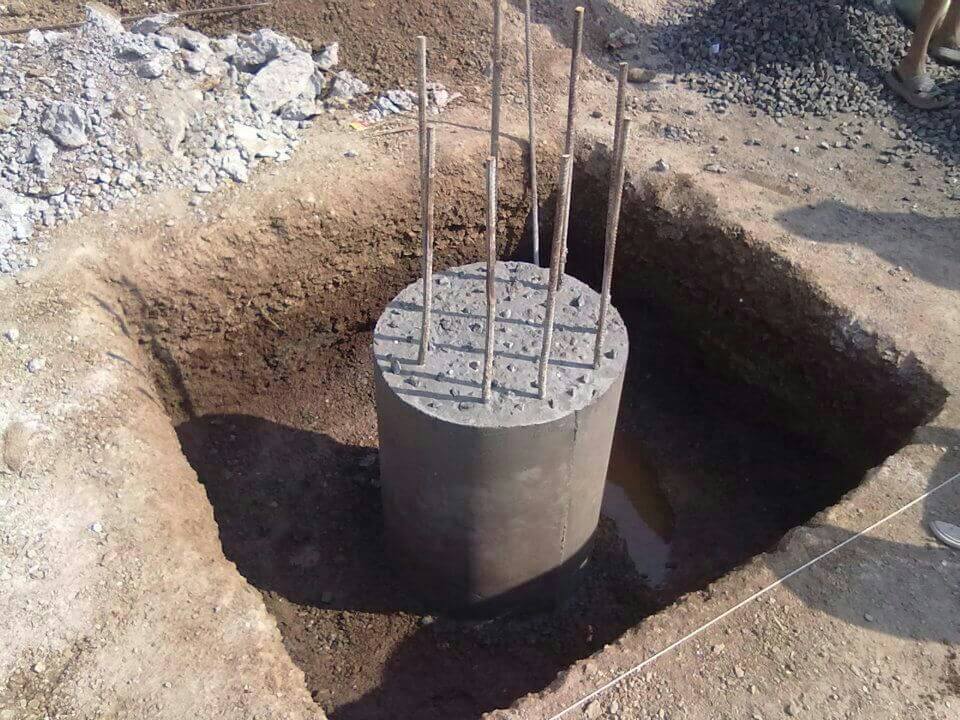
Piles of Potential: In Which Piled Foundations Bolster High-Rises


Within contemporary construction, where architectural ambitions reach new heights, the importance of a solid foundation cannot be overstated. As metropolises develop and land increases in value, engineers and builders are increasingly turning to piling foundations to support soaring high-rises and other large structures. Piling foundations are basically deep foundations that carry the load of a building through weak soil layers to solid earth, making them key for maintaining the safety and longevity of detailed architectures.
Grasping the ins and outs of piling foundations is critical for anyone involved in construction, whether you are a novice or a seasoned expert. This article aims to clarify the many components of piling foundations, from the different types available and their installation process to the justification of their necessity in adverse soil scenarios. By exploring the science and technology behind these structures, we strive to underscore their pivotal role in current tall building practices and the innovations shaping their future.
Grasping Foundation Foundations
Foundation structures are essential construction elements used in building for hold up heavy loads, especially within skyscraper structures such as tall buildings. The piles consist of upright supports, termed foundational piles, which installed deep the to reach firm substrate as well as the bedrock. Piling Contractors Derby becomes particularly important when top soil attributes prove to be insufficient to adequately withstand the weight of the edifice, turning pile foundations the trustworthy option for constructing on locations experiencing weak and compromised soil.
The main role of foundation foundations consists of for conveying a edifice's load across strata of soil which may can not bear weight by their own. By means of extending deep earth, piles ensure the necessary stability, guaranteeing that this edifice stays secure during the lifespan. This is crucial both to ensure a safety of the edifice it as well regarding the inhabitants and the surrounding surrounding environment.
Different varieties of piling solutions are available, each designed for meet specific soil situations and construction specifications. Driven piles piles tend to be commonly used for places with firm soil, while bored piling are suitable in less stable soil. Understanding these different types of piling solutions along with their uses are important for construction experts as well as builders to ascertain they select the appropriate solution in all construction initiative.
Types and Applications of Piling
Piling systems can be classified into various forms, each suited for varied soil conditions and engineering needs. The two main categories are driven piles and bored piles. Driven piles are pre-formed and driven by pounding them into the ground, making them ideal for compact soil and heavy weight needs. Drilled piles, on the other hand, are formed by drilling into the ground and then filling the borehole with cement. This method is more compatible for looser ground where shock from impact-driven piles could lead to disruption.
In addition to these types, piles can be made from different materials including cement, metal, and timber. Cement piles, often used for towering structures, offer resilience and resistance to moisture, making them suitable for different conditions. Metal piles provide significant strength and are often used in heavy construction where load-bearing capacity is essential. Wooden piles, while generally less common, can be effective in specific instances such as small buildings or transitory projects. https://caspersen-mckinley-3.technetbloggers.de/controlling-piling-strategies-for-green-construction has its unique advantages and considerations depending on the objectives and location specifics.
The implementation of piling foundations extends across a wide range of construction projects. They are particularly beneficial in coastal construction, where soil conditions can be uncertain due to flooding and degradation. Piling is also crucial for developments in metropolitan regions where there is restricted space but vertical expansion is needed. Tall buildings, in particular, rely on the deep foundation capabilities of piling systems to distribute their large loads uniformly, ensuring safety and safety even in weak soil conditions. https://notes.io/eqduM of type of pile and material is crucial in meeting the unique needs of each construction project.
Benefits and Innovations in Piling
Piling systems present numerous advantages that render the systems a favored choice for underpinning massive structures such as tall buildings. One of the most benefits is their capacity to withstand heavy weight while spreading the load effectively. This feature is essential in urban environments in which space's limited, and the ground conditions may not support traditional foundations. Piling systems are designed to transfer load deep into solid soil or rock, guaranteeing that buildings remain steady over time. Additionally, they aid prevent structural settlement, which can result in expensive fixes and safety hazards.
Improvements in foundation technology has also led to advancements which enhance efficiency and reduce ecological impact. Methods such as mini piles and tiny piles allow for placement in narrow areas and challenging soil conditions without the need for extensive excavation. In addition, innovations in building materials, such as the use of high-strength metals and reinforced concrete, have boosted the strength and resilience of these systems. Such contemporary approaches not only improve the functionality of foundations but also contribute to more eco-friendly building practices by minimizing waste and disruption to the nearby environment.
The future of these foundation systems looks bright as engineers continue to explore new methodologies and technologies. Advances in automated drilling techniques and advanced load testing are rendering installations faster and more reliable than ever previously. Furthermore, the integration of green methods in base design, such as the utilization of recycled resources, is fostering environmentally aware construction. As urban areas grow taller and the demand for efficient building strategies rises, these foundation foundations will play a pivotal role in defining the skyline of upcoming city environments.